


Image © Lindsay Bucknor
BUILT IN 1887, WIGHTWICK MANOR IS A SHRINE TO THE ARTS AND CRAFTS MOVEMENT
The sumptuous interiors and original De Morgan tiled fireplaces provide a perfect setting for the De Morgan Collection to be housed in a purpose-built gallery in the grounds. The exhibition Look Beneath the Lustre invites visitors to discover how the wonderful De Morgan artworks were created.
Opening Times
Daily 10am to 4pm.
Closed on Christmas Day and Boxing Day.

The Malthouse Gallery at Wightwick Manor houses a magnificent display of artworks from the De Morgan Collection, including several of Evelyn De Morgan’s paintings and over ninety of William De Morgan’s ceramics, plus over one hundred and fifty tiles and other works in the tile library.
Explore highlights in the Malthouse Gallery by clicking the link below



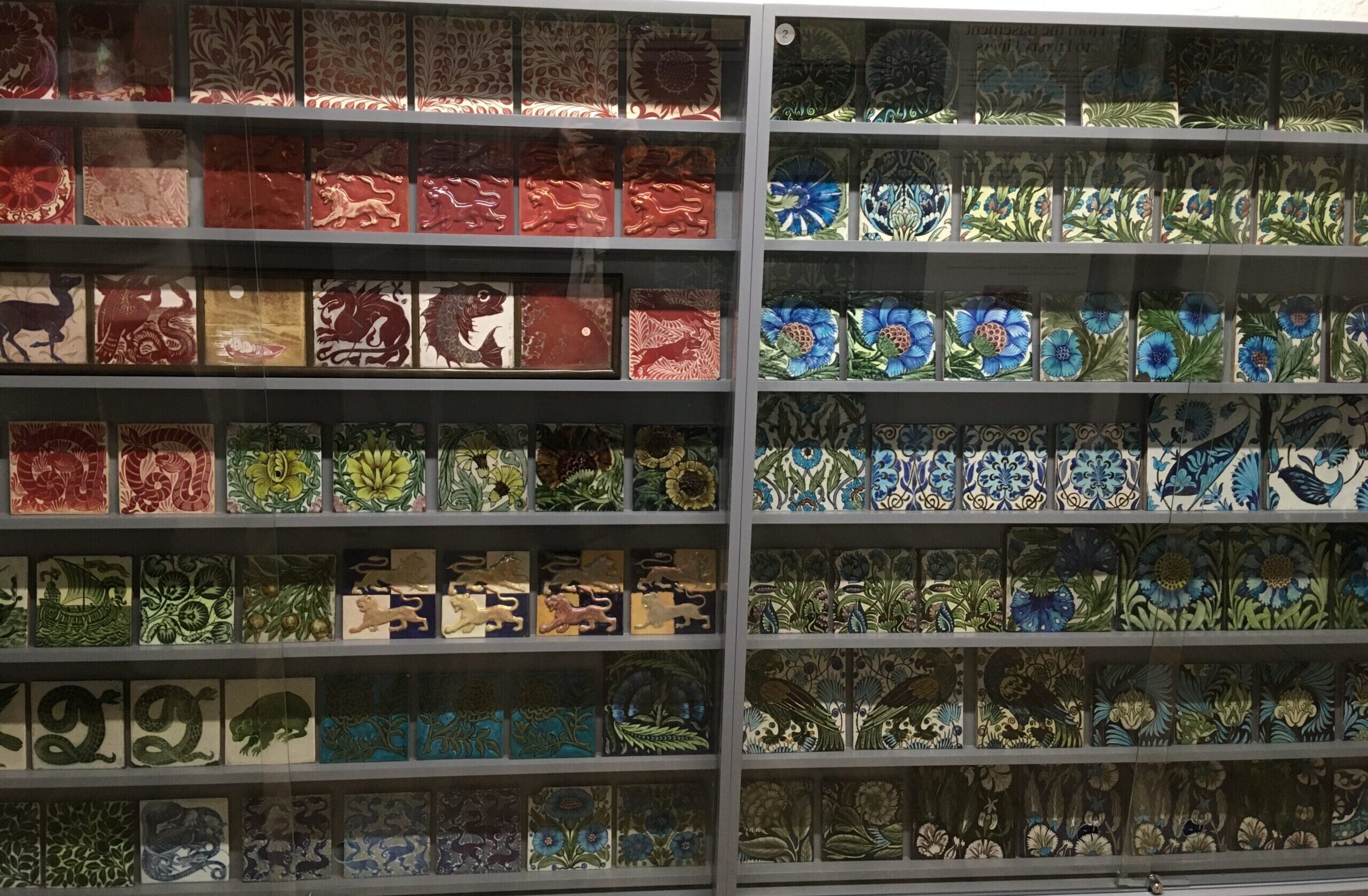
The magnificent Tile Library can be visited in a specially-created display space which allows everyone to see over 150 of William De Morgan’s tiles in the De Morgan Collection, which were formerly in store and not publicly accessible.

In the realm of decorative arts, William De Morgan is well known for his creativity and innovation, particularly in the field of ceramic tiles. Born in 1839, De Morgan was a Victorian-era artist renowned for his remarkable contribution to the Arts and Crafts movement. His legacy endures through his intricately designed and vividly coloured tiles, particularly his glistening lustreware, each a testament to his unique artistic vision and exceptional craftsmanship.
William De Morgan initially embarked on his artistic journey as a stained-glass artist. However, he soon shifted his focus to ceramics, a decision that would shape his artistic legacy. In collaboration with William Morris, De Morgan became an integral part of the Arts and Crafts movement, which sought to revive traditional craftsmanship in the face of industrialisation.
In 1873, William De Morgan established De Morgan & Co. and primarily sold painted tiles from his early premises in Chelsea, London. His designs were so popular that they were commissioned by everyone from the artist Frederic, Lord Leighton for his majestic Holland Park home (now Leighton House Museum) to P&O ocean liners who ordered tiles for over 12 luxury interior decorative schemes.
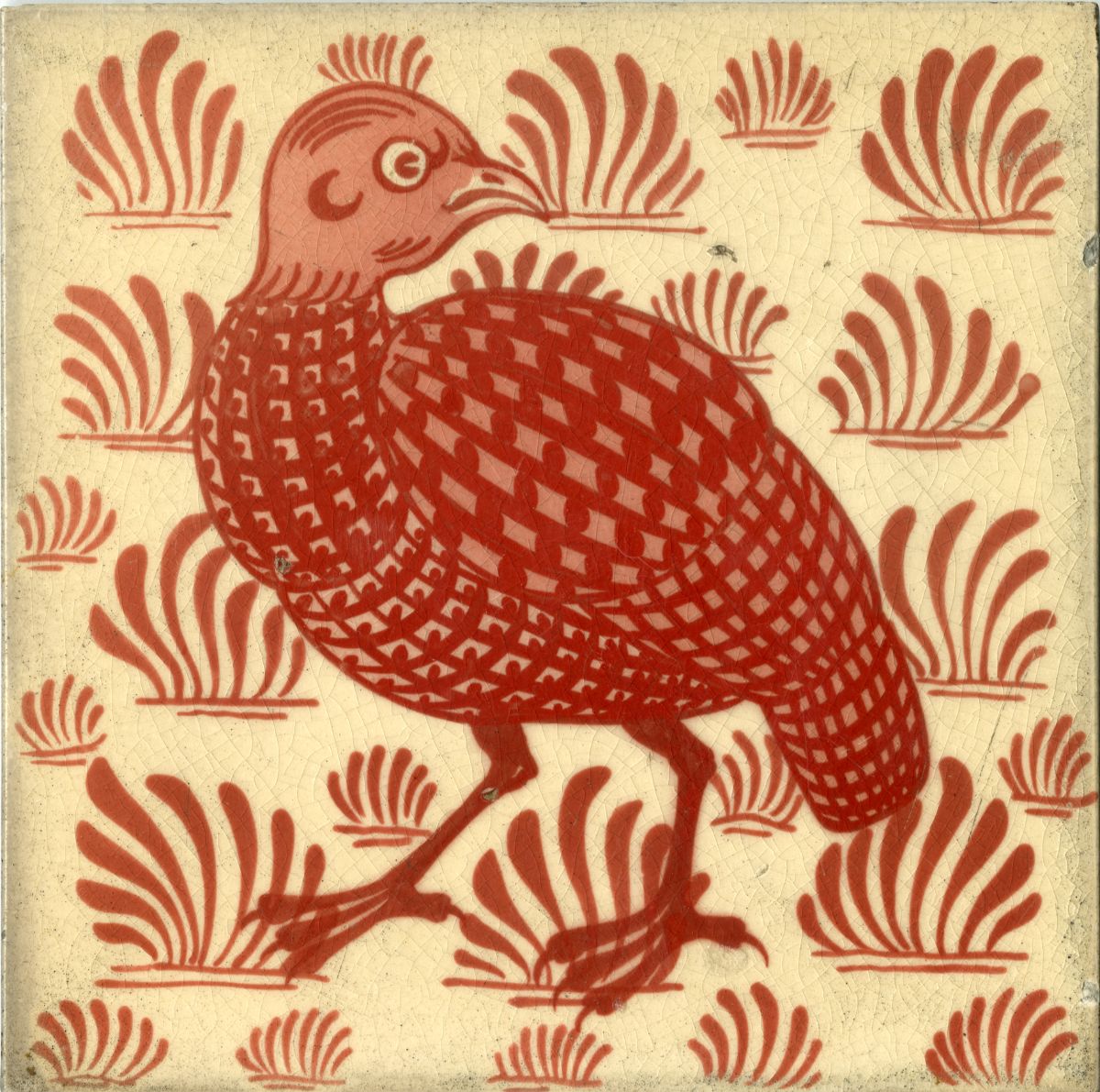

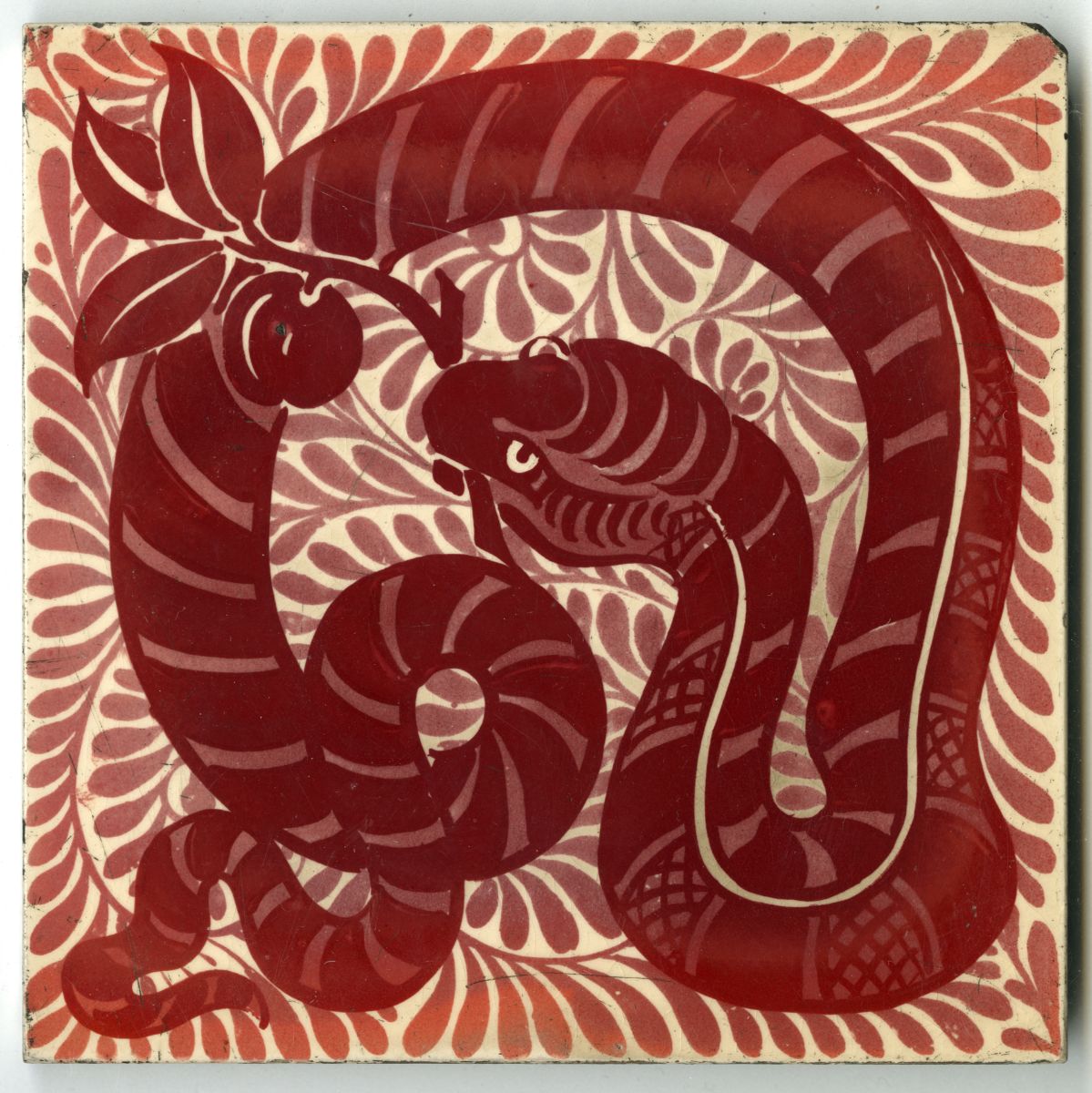

De Morgan’s tile designs often feature fantastical creatures, mythological scenes, and floral patterns, demonstrating his keen interest in medieval and Renaissance art. The Tile Library displays De Morgan’s tiles in colour order, so visitors are free to make their own connections and spot the differences between the glazed surfaces and De Morgan’s wide range of influences.
De Morgan’s tiles are a fusion of various influences, including Islamic, Persian, and Hispano-Moresque designs. His fascination with Middle Eastern and Islamic ceramic traditions is evident in the intricate geometric patterns and vibrant colour palettes that characterise many of his tile creations. The use of cobalt blue, turquoise, and rich earth tones reflects his admiration for Persian and Islamic aesthetics.
De Morgan’s fabulous Iznik Tiles, inspired by the 15th century ceramics he worked with at Leighton House are on display. They are a marvellous example of how De Morgan adapted designs to create his own beautiful artworks. The original design worked over two tiles, but De Morgan’s design works over four, so he has expanded the original design.
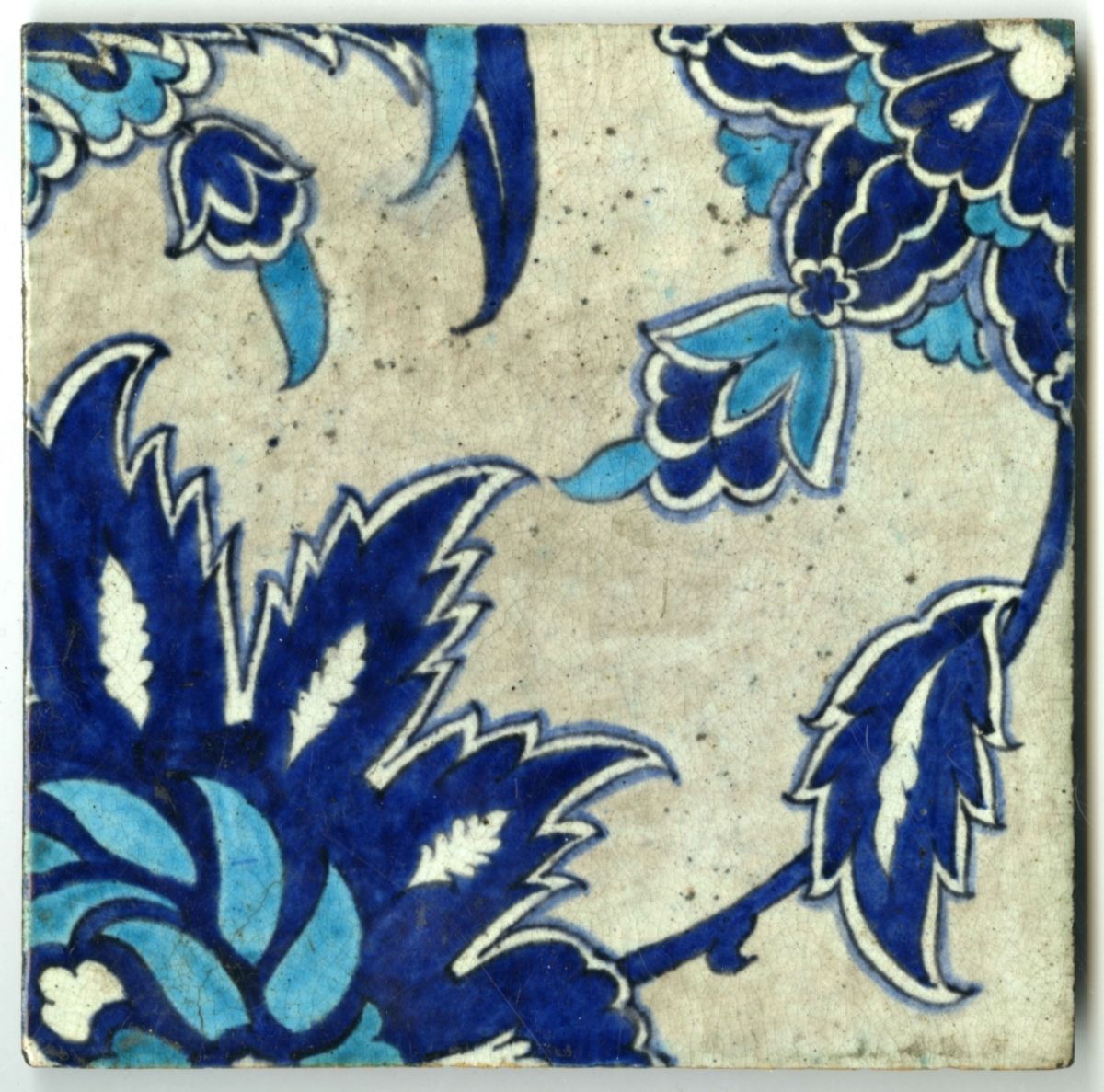

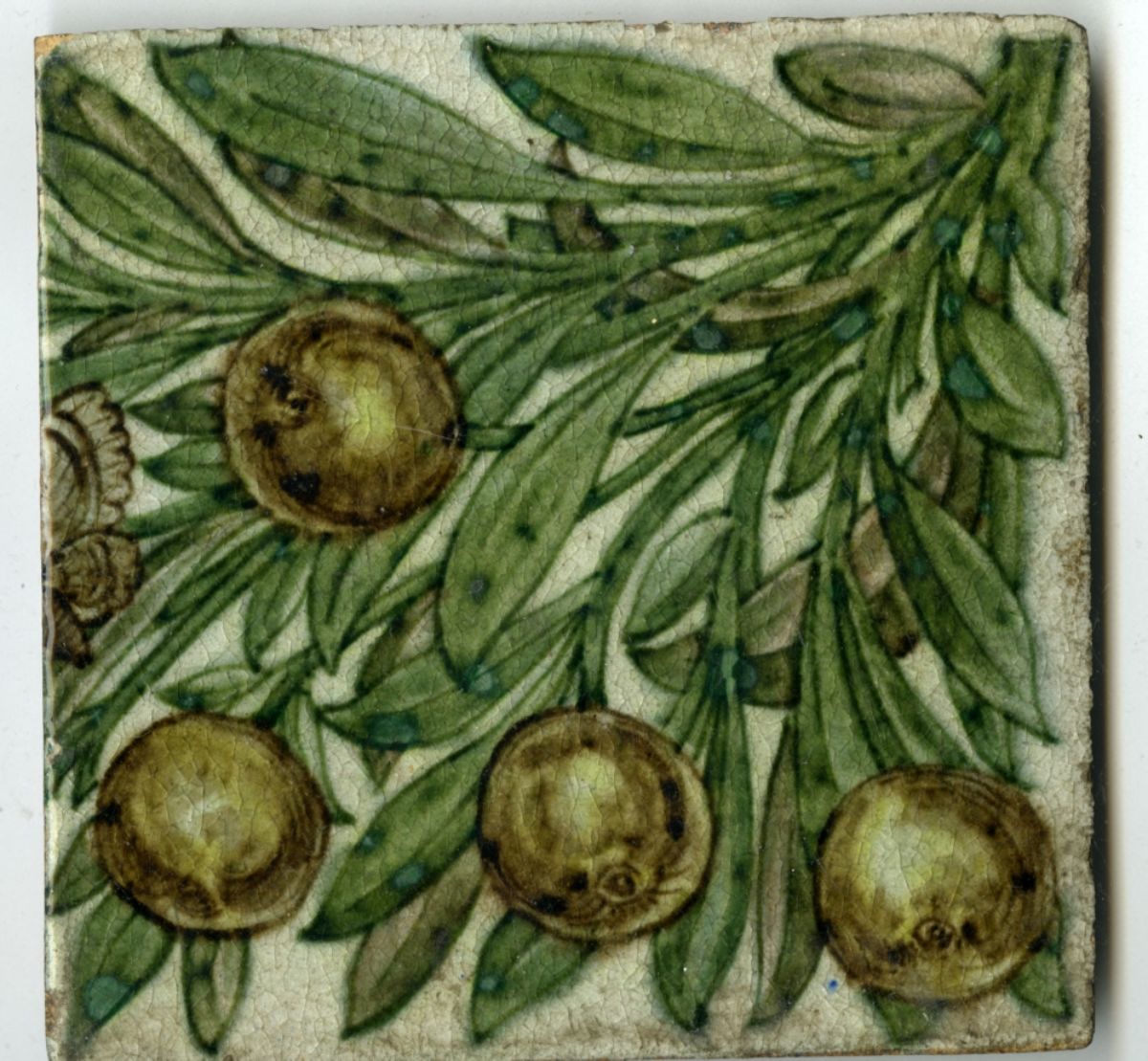
Designs which have never been seen by the public before are now on display. Of note is the fruit and branch tile, which has a butterfly on the far edge, meaning it is probably part of a larger panel.
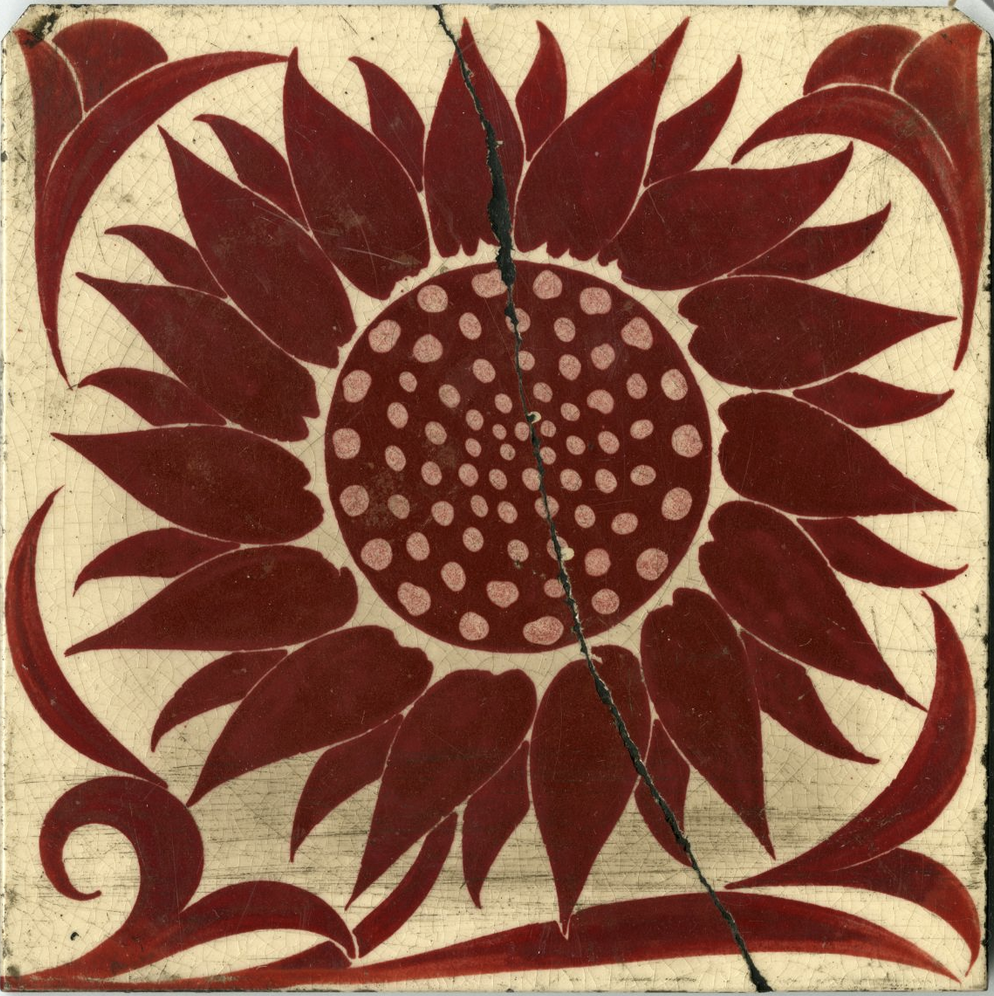
Also on display is the beautiful ‘Sunflower Tile’. This Aesthetic movement emblem was proudly worn by Oscar Wilde, who inspired the creation of Wightwick Manor with his 1885 ‘House Beautiful’ Lecture.
The De Morgan Tile Library offers a captivating journey through the intricate world of De Morgan’s tile artistry.
Donate
As an independent charity, we rely on your generous support to care for and display this wonderful collection. Please consider donating to help us continue this work.